Showing posts with label Genital Herpes. Show all posts

Friday, March 4, 2011

Symptoms of genital herpes

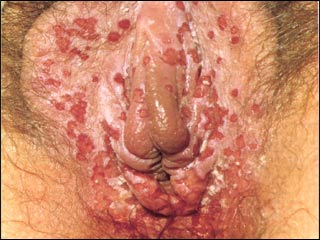
A primary infection of genital herpes can cause several different symptoms including:

  • painful red blisters that burst to leave open sores around your genitals, rectum (back passage), thighs and buttocks
  • blisters and ulcers on the cervix (lower part of the womb) in women
  • vaginal discharge in women
  • pain when you pass urine
  • a high temperature (fever) of 38°C (100.4°F) or over
  • a general feeling of being unwell, with aches and pains

These symptoms may last for up to 20 days. However, the sores will eventually scab and heal without leaving any scarring.

Recurrent infections

Once a primary infection of genital herpes has subsided your symptoms will disappear, but HSV will remain dormant (inactive) in a nearby nerve. The virus may be reactivated from time to time, travelling back down the nerve to your skin and causing recurrent infections.

If you have a recurrent infection of genital herpes, the symptoms and signs may include:

  • a tingling, burning or itching sensation around your genitals, and sometimes down your leg, before your blisters appear (this can signal the onset of a recurrent infection)
  • painful red blisters that soon burst to leave sores around your genitals, rectum (back passage), thighs and buttocks
  • blisters and ulcers on the cervix (lower part of the womb) in women

Recurrent infections of genital herpes are usually shorter and less severe than primary infections. This is because your body has produced protective antibodies (proteins that fight infection) in reaction to the previous infection. Your body now recognises the virus and mounts a response that is able to fight HSV more effectively.

Your symptoms may last for up to 10 days and, in most cases, you will not have any of the other symptoms that are associated with a primary infection, such as a fever or generally feeling unwell. In some cases, the blisters and ulceration may also occur in the same area each time you have a recurrent infection.

Over time, you should find that any recurrent genital herpes infections become less frequent and less severe. genital herpes that is caused by type 1 herpes simplex virus (HSV-1) tends to recur less often than infections that are caused by type 2 herpes simplex virus (HSV-2).


Symptoms of genital herpes

Genital Herpes

Genital herpes is one of the most critical sexual diseases which the world is facing today. Genital herpes is one of the sexual diseases which are difficult to detect in some cases. However, many people with genital herpes have at least some detectable signs. Genital herpes in some people may never show symptoms, but for others, the symptoms become so severe that complications develop, especially if sores or herpes blisters appear in other areas of the body. Symptoms of genital herpes may or may not accompany an outbreak.

Genital Herpes

Genital herpes in some people may never show symptoms, but for others, the symptoms become so severe that complications develop, especially if sores or herpes blisters appear in other areas of the body.

Once you have been diagnosed as positive with genital herpes, it would be totally meaningless to identify the source, since you may have had it for years already and the first outbreak only happened recently. What you needed to do is to take steps so that you may still live a relatively normal life. People with genital herpes do live normal lives.

Sixty percent of the population has herpes. We are living in a herpes nation. There is no reason for us to be a reviled minority. If we were more united and more apparent about the disease we would be in a so much better position to motivate understanding and support from those who are still in a safe position. We would be better able to educate young people on herpes prevention and herpes awareness. We would be better able to reach out to the people with herpes who have had their self-esteem devastated.

Friday, February 11, 2011

Genital Herpes

Herpes, gonorrhea, chlamydia, and syphilis are recognizable STDs from textbooks and billboards, but nongonococcal urethritis (NGU) has yet to make it into the side of a bus. Also diagnosed as a “non-specific urethritis,”the infection in the penis caused by bacteria and symptoms include a discharge from the head of the penis and painful urination. Herpes is one of the most common STD’s and is easily contracted. At first, embarrassing, it is easily controlled by good medication that you only have to take at the first sign of an outbreak and since that would be around your mouth and lips, it should be easily seen. Herpes virus can also infect other parts of the body.

Genital herpes is more common among blacks than it is among whites, and it becomes more common as people age. The more sex partners people have, the more common it is, too. Genital herpes infections are almost always spread sexually, either by intercourse or oral-genital contact. Condoms will help prevent transfer of the virus from one person to another.

Sex is great and there are many different things you can do to have an active and fulfilling sex life. However, a number of these do carry some risk of getting a sexually transmitted infection. Sexual partners should be treated simultaneously for maximum efficacy and prevention of re-infection.

Studies reveal that genital herpes is one of the most common sexually transmitted diseases in the United States. Nationwide, at least 45 million people ages 12 and older or one out of five adolescents and adults have had a genital herpes infect


Genital Herpes

Genital Herpes

Genital Herpes

Genital Herpes

Genital Herpes